
Will County Directory Years
Will County city directory research begins with overlapping collections, not one complete shelf. The Joliet Public Library Local History Room has county volumes for 1859–60 and 1872–73, Joliet directories from 1875 forward, and telephone books beginning in 1908. Its use of “present” describes the span, not a promise that every year survives. The Joliet Area Historical Museum lists directories from 1872 through 1997, with a detailed holdings list extending to 2002. Plainfield supplies another strong cross-check.
| Collection | Years | Where Held | Access |
|---|---|---|---|
| Will County printed directories | 1859–60; 1872–73 | Joliet Public Library | Local History Room consultation |
| Joliet city directories | 1875–present at JPL; museum material 1872–2002 | JPL, Joliet museum, PAPL | Print, microfilm, staff help, selected digital copy |
| Plainfield–Joliet directories | 1900, 1927, 1932, 1966–present | Plainfield Area Public Library | Local-history collection |
| Lockport directories | 1973–93 | Plainfield Area Public Library | In-person year lookup |
| Telephone directories | Joliet from 1908; Plainfield 1924–56 | JPL and PAPL | Name, phone, and address clues |
The Plainfield Area Public Library collection also has Joliet directory microfilm for 1872–1930 and local telephone books for 1925–55. A missing edition on one shelf may exist at another. Ask for the exact title and year, especially when a publisher changed or the book joined Plainfield and Joliet.
Start with the collection closest to the place named in the old record. Joliet is the county seat, but a Lockport or Plainfield family may be easier to follow through the local library’s own sequence. Compare duplicate years when handwriting, damaged pages, or a faint scan makes an entry doubtful. A second copy can also reveal a page or street section missing from the first.
Will County Directory Research Desk
The Local History Room is at the Ottawa Street Branch, 150 N Ottawa St in Joliet. Public access follows branch hours: Monday through Thursday, 9:00 a.m. to 9:00 p.m.; Friday and Saturday, 9:00 a.m. to 5:00 p.m.; and Sunday, 1:00 to 5:00 p.m. Sunday hours pause from Memorial Day through Labor Day. The branch phone is 815-740-2660. The Local History Librarian line is 815-846-3112.
An appointment is wise for a long city directory search. Staff can check newspaper microfilm when a month and year are known. The room holds newspapers from 1846 forward, atlases, plat books, yearbooks, obituary indexes, and local archives. Those sources help distinguish two people with the same name or explain why an entry vanishes.
The library’s Local History Room page shows the available routes.
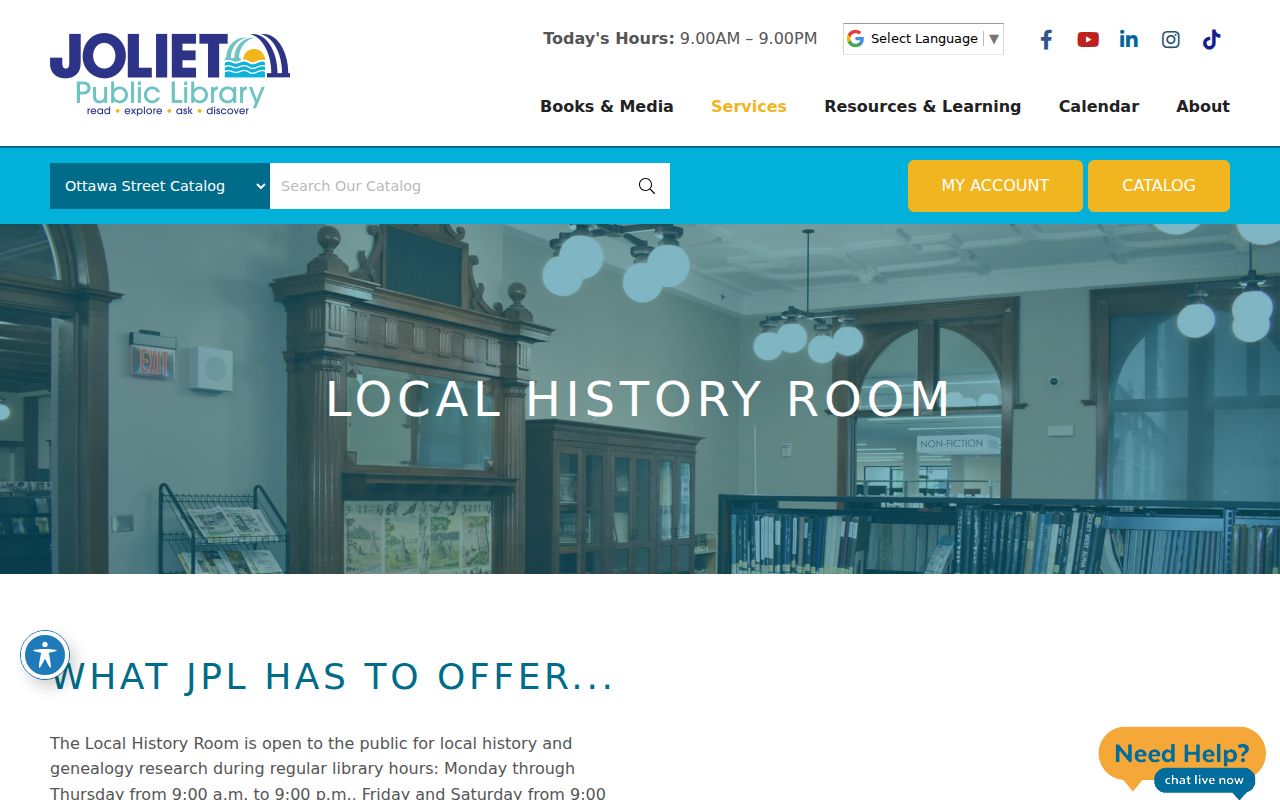
The captured page leads to staff help and the physical collection when an online search falls short.
Digitized Will County City Directory
One complete online example is the library’s 1968 Joliet volume. It is a page-image PDF, not a modern search form with reliable text fields. Browse the alphabetical pages, record the image number, and save the title and year with each note. The Joliet history and genealogy resources page links the digitized directory and related databases.
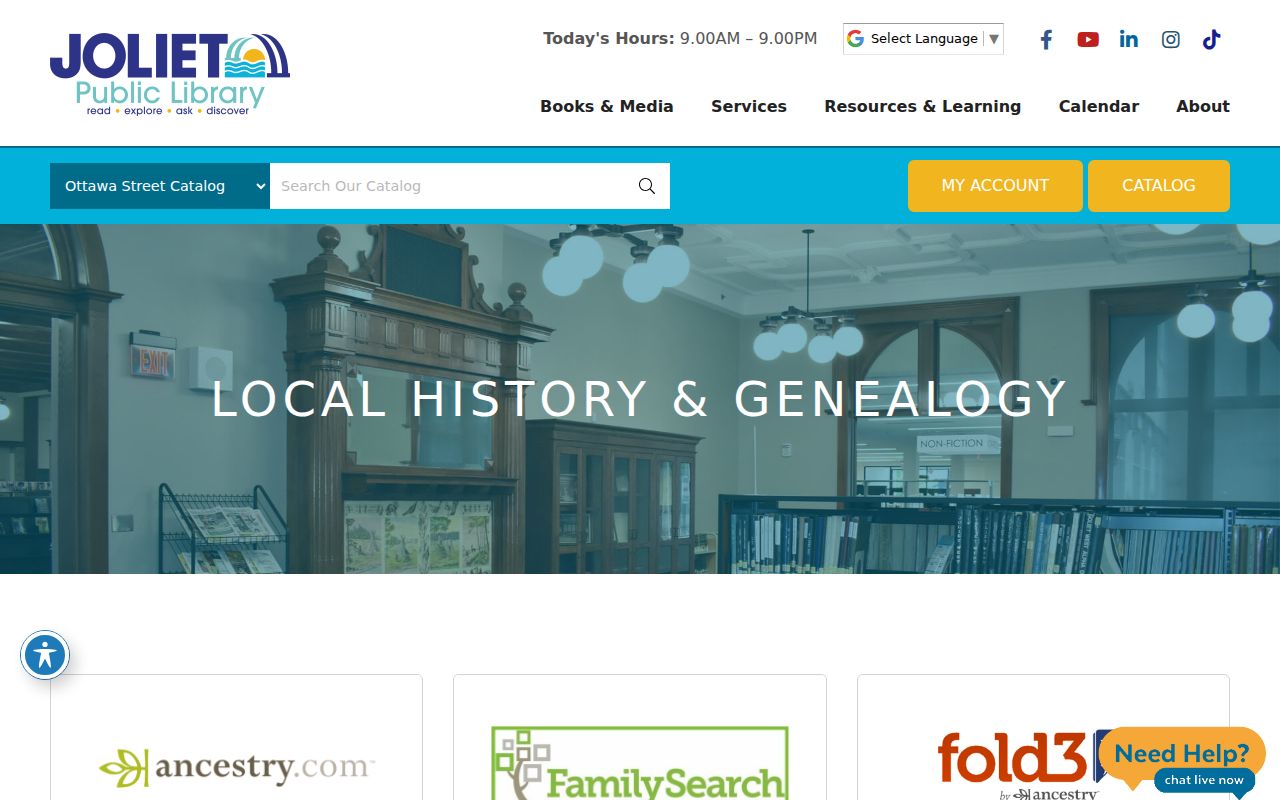
This resource screen is the online doorway; shelves and staff still matter when a scan, year, or reverse section is absent.
Search surname variants and initials. Old type, abbreviations, and image quality can defeat automated text search. Browsing nearby entries often reveals the form the publisher used. Note that exact spelling before moving to another record.
Read Will County Directory Entries
A Will County city directory entry is a dated snapshot. An alphabetical line may identify a surname, given name or initials, spouse notation, street number, and work or organization description. It may carry a cross-reference. Record only what is visible, then consult the book’s key before expanding a short form.
| Name | Surname, given name, initials, and any household notation |
|---|---|
| Address | Street number and name as printed for that edition |
| Description | Trade, business, or organization when included |
| Place heading | Joliet, nearby community, township, or county section |
| Citation | Title, year, and PDF image or printed page number |
- Criss-cross directory
- A book or section arranged by street and address, rather than only by surname.
- Householder index
- A list centered on the person identified as household head under the publisher’s rules.
- Abbreviation key
- The legend for short forms and symbols. Copy it before reading entries.
No official catalog identifies a complete reverse run by year. Ask JPL or PAPL for an address, street, reverse, or criss-cross section in the chosen edition. The line may omit other people at the address.
Joliet Directory Publishers and Gaps
The Joliet museum holdings include Polk city directories and books that cover Rockdale, Crest Hill, and Lockport Township. In-person research is the usual route. Photograph the title page, publisher, and year before copying an entry. That small habit keeps two similar editions from being merged later.
The museum also preserves newspapers from 1853–1924 and 1936–1987, with gaps, plus Herald News photographs from 1960–2000. These are useful when a printed entry supplies a name and address but no reason for a move or change. Call 815-723-5201 and confirm research hours before visiting 204 Ottawa St in Joliet.
Collection lists outrank broad year spans. “1872–1997” does not mean every annual volume is present, and a city directory may cover nearby places unevenly.
Publishers selected names and formatted places under their own rules. Polk appears in the museum holdings, but not every book in the run has the same publisher or scope. Check the introduction for included communities and scan the final pages for a street section. If Rockdale, Crest Hill, or Lockport Township appears in one edition but not the next, the omission may reflect the book’s coverage rather than a family move.
Trace Will County Families by Year
Follow one household through the nearest available editions, then pair directory snapshots with public federal census images. Census images for 1900–1950 can fill decade points, while annual or periodic city directories help locate moves between them. Keep each source separate until the names, addresses, and dates agree.
- Begin with a known name, address, and rough year from family papers, a newspaper, or a library index.
- Find the alphabetical entry. Copy spelling, initials, household notation, street number, page, and edition.
- Ask for the address or reverse section in the same year, then check editions just before and after it.
- Compare the nearest public census year through library databases. Account for city annexations and township labels.
- Confirm the match through an obituary, marriage index, cemetery register, probate file, or recorded deed.
Disappearance has several causes. A person may have moved, died, changed a surname, been missed, or chosen not to be listed. The Will County resident lookup offers a modern verification path when the historical trail reaches recent records.
Will County Newspapers and Obituaries
Newspapers and obituary files turn a city directory line into a fuller family lead. JPL has printed obituary indexes for 1915–18 and 1976–2012. PAPL’s obituary database begins in 1893 and records the name, place of death, publication date, volume, section, and notes. Its Plainfield Enterprise run is searchable for 1928–2019, with microfilm from 1893 forward and known gaps.
JPL staff can search for obituaries, marriage announcements, and birth notices when given a month and year. Microfilm copies are free. The library also holds African-American Joliet and Lockport funeral brochures from 1968–2012. The Will County Historical Museum research collection adds early twentieth-century African-American genealogy, yearbooks, church records, cemetery books, and photographs through a research-request route.
Plainfield adds church and community sources that rarely appear in a standard name index: an 1889 Methodist Episcopal Church Directory, the Farmer’s Directory of Will and Southern Cook from 1918, pioneer necrologies, cemetery ledgers, and local yearbooks. These sources can test kinship, school, faith, and community ties without assuming that a person stayed at the same address.
Map Old Will County Addresses
Some early families appear in land descriptions before a modern street number existed. The Will County Preserving History’s Heritage project digitized 1873 and 1909 atlases plus an 1835–1885 grantor/grantee property index. A grantor is the party transferring an interest; a grantee receives it. The index shows a transaction role and citation, not proof that the person occupied the land.
For Lockport, the 1909 Sanborn map has ten sheets. Building footprints, street labels, and business uses can bridge a city directory address to the later parcel map. This is especially useful around canal, rail, and industrial districts where names and boundaries changed.
| 1835–1885 | WCPHH deed index connects people and organizations to volume/page citations. |
|---|---|
| 1873 and 1909 | Atlases show roads, parcels, townships, and development. |
| 1909 | Lockport Sanborn sheets add building and street context. |
| 1939 onward | County aerial layers show later physical change. |
Will County’s boundary reached its present form in 1845. Postal and municipal labels can still differ, so retain both when citing an old entry. Note: A map explains place and change, while the directory supplies the dated name and address clue.
When the address finally matches a modern parcel, stop and preserve the chain of citations. The old book, map sheet, deed index, and current parcel each answer a different question. Together they can support a sound family or place history without forcing one source to prove more than it shows.