
Will County Address History Sources
Choose the source by period. Current parcel data gives a starting PIN, but previous residents emerge only when deed transfers, year-specific directories, released census schedules, maps, and death or probate evidence are placed on one timeline.
| Source | Years It Covers | Where Held | What It Shows |
|---|---|---|---|
| Recorder Direct Search | Generally 1965-current online | Recorder portal, counter, archives | Parties, transfer, book/page, PIN, legal text |
| WCPHH deed index | 1835-1885 | Plainfield library digital project | Grantor/grantee role, transaction, volume/page |
| Joliet directories | 1875-present collection label | Joliet Public Library | Dated names, addresses, phones, descriptors |
| County directories | 1859-60 and 1872-73 | Joliet Public Library | Early county household and place clues |
| Federal census | 1900-1950 public pairing range | Library databases and federal images | Household members at the census date |
| Sanborn and atlases | 1867-1970 Illinois maps; local dated items | CARLI, Library of Congress, WCPHH | Building footprint, street and land context |
Start with the assessor and Recorder for a modern property. Move to the archive when Direct Search stops. For a late nineteenth or twentieth-century household, choose a directory nearest the target year, then pair it with a census, obituary, newspaper, or map.
Start With a Will County Parcel
Search the Supervisor of Assessments address form and copy the PIN. The assessor is a current courtesy dataset compiled from township assessors, not a certified title record. Next, click the parcel in the county GIS viewer and record the situs, municipality, ZIP, parcel shape, and legal or tax-map context that will help distinguish it from a same-number address.
Keep the mailing address apart from the situs. A tax notice or deed may direct mail somewhere other than the building being researched. The legal description and PIN survive many street-label changes, so they are stronger bridges into older deeds and plats.
Walk Back Will County Deeds
The Will County Recorder search instructions support name, date, document type, address, book/page, subdivision, and PIN routes. Begin with the newest deed tied to the parcel. Read the transaction role and document type before treating either indexed party as an owner or resident.
- Copy the current assessed owner, PIN, and legal description.
- Find that owner's acquisition deed in Direct Search. Record document number, date, parties, and book/page.
- Search the seller as a prior grantee to locate the earlier acquisition.
- Repeat the pattern, checking quitclaim, trustee, executor, tax, and transfer-on-death instruments for a break in the chain.
- When online coverage stops, take the citation to the Recorder archive, microfilm, deed books, fax, or email copy route.
- Grantor / grantee
- The grantor transfers an interest; the grantee receives it.
- Chain of title
- The linked series of recorded transfers for the same land.
- Legal description
- The lot, block, subdivision, or land description that identifies property apart from its street label.
Cross the Will County Archive Cutoff
Direct Search is a free index, and online documents generally run from 1965 to the present. Its observed public setup exposes metadata but does not provide free images. Tapestry offers paid search and documents, while Laredo is a subscription service. For earlier material, use the Recorder's public workstations, historical indexes, microfilm viewers, deed books, plat books, and maps.
The Recorder Archives and Copies route is shown below.
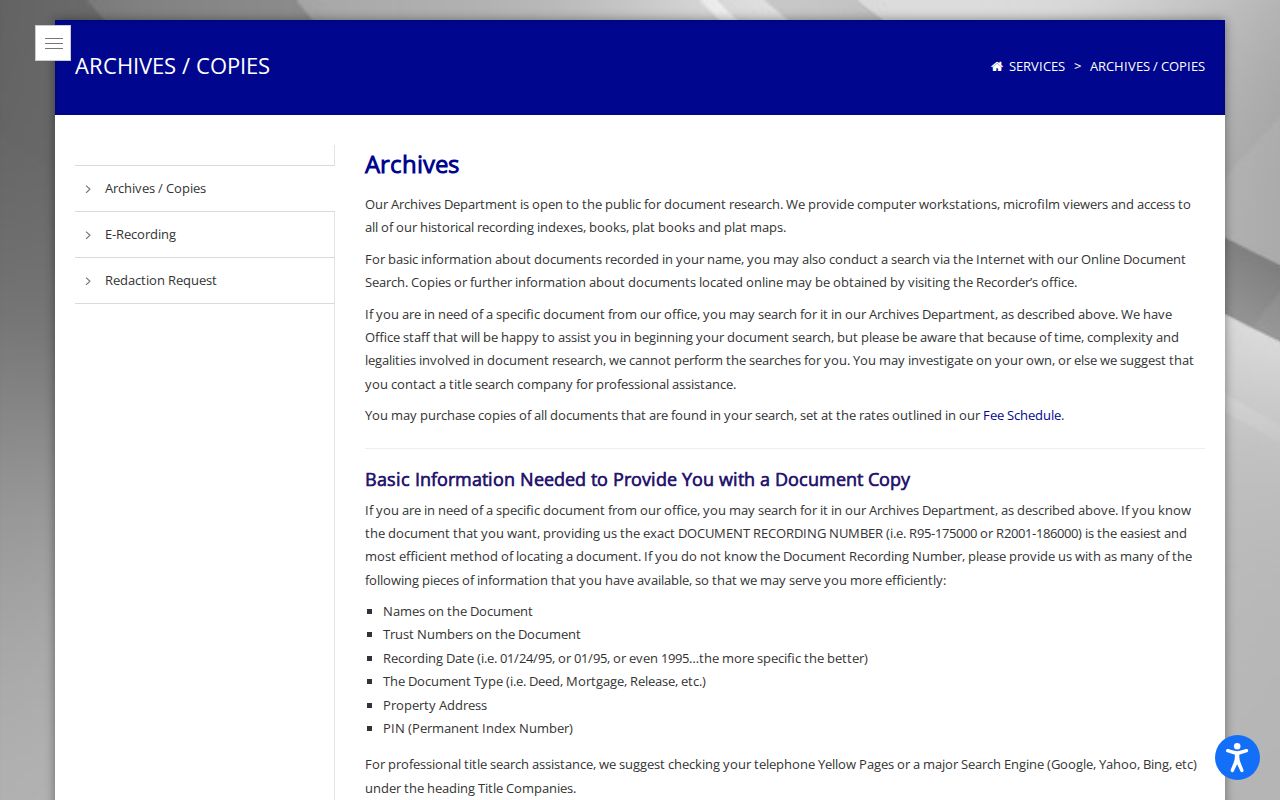
The archive preserves the backward trail after the web index ends. Supply a document number when requesting an older image by fax or email, and verify the current copy charge with the office.
Previous Residents Before Online Deeds
The Will County Preserving History's Heritage project digitized the grantor/grantee index for 1835 through 1885. Its sample display spans 17,276 pages, and the Illinois Digital Archives describes more than 250,000 property-transaction entries. This is a strong Profile 4 comparison: the old index offers name roles and citations, while the modern portal offers later metadata and different access to images.
The historical grantor/grantee index appears below.
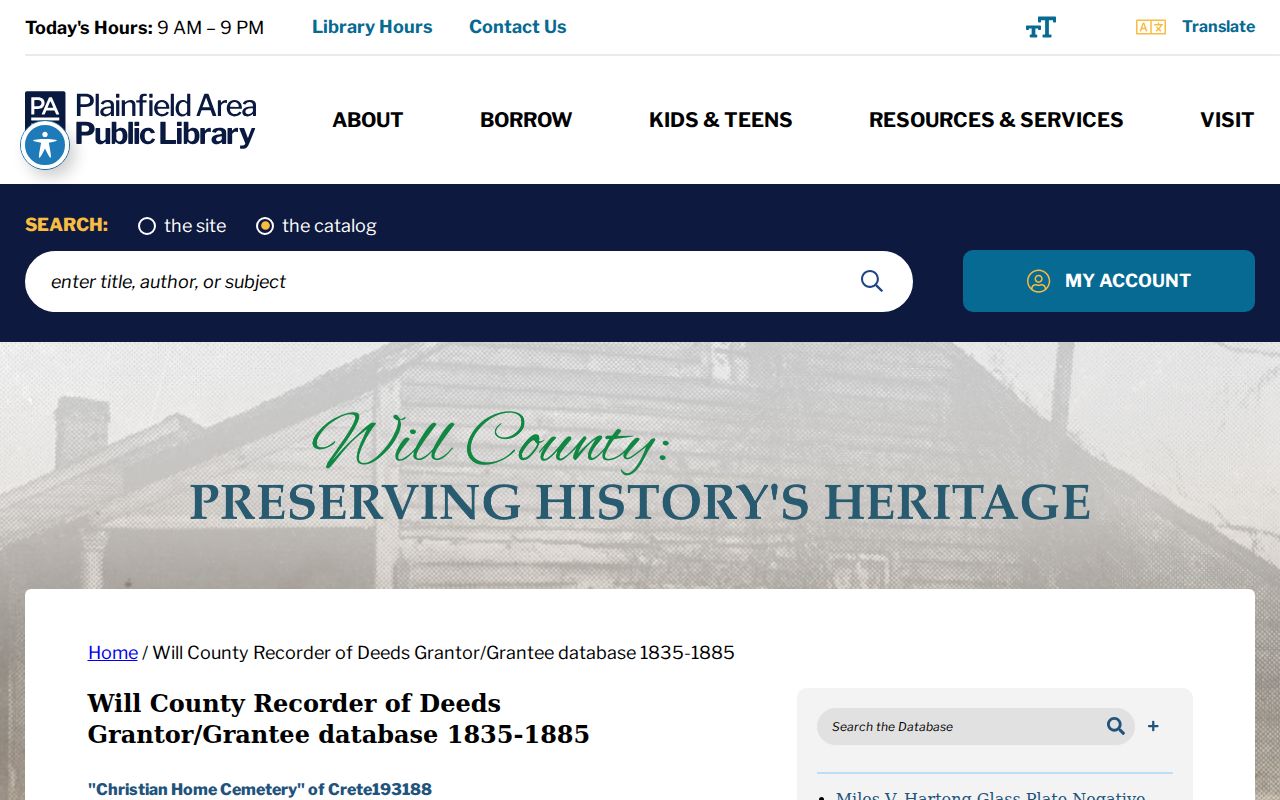
Visible fields include personal or corporate name, grantor or grantee role, transaction type, volume/page, index page, location, and notes. An entry proves an indexed transaction, not that the party lived on the land.
Date a Will County House
Maps answer a different question from deeds: what stood on the site, what the road was called, and how the lot related to nearby buildings. WCPHH provides 1873 and 1909 atlases. The Illinois Sanborn collection covers 1867 through 1970, and the Library of Congress holds a ten-sheet February 1909 Lockport set.
Compare the legal description and street with the atlas or fire-insurance sheet. Then check county GIS aerial imagery from 1939, 1997, 2007, 2014, 2021, 2025, and 2026. Imagery can date a visible change, but it cannot name previous residents or prove ownership.
Note: No official single street-renumbering chronology was located, so retain PIN, lot, block, postal label, and old street name in every search.
Will County House History Help
Plainfield Area Public Library's local-history collection exposes a house-history guide or service route. Ask staff to combine the address section, directory year, deed/PIN bridge, and newspaper date search. Its holdings include Plainfield–Joliet directories for 1900, 1927, 1932, and 1966 forward; Joliet microfilm for 1872–1930; Lockport directories for 1973–93; and local phonebooks.
The Will County Historical Museum collections are pictured below.
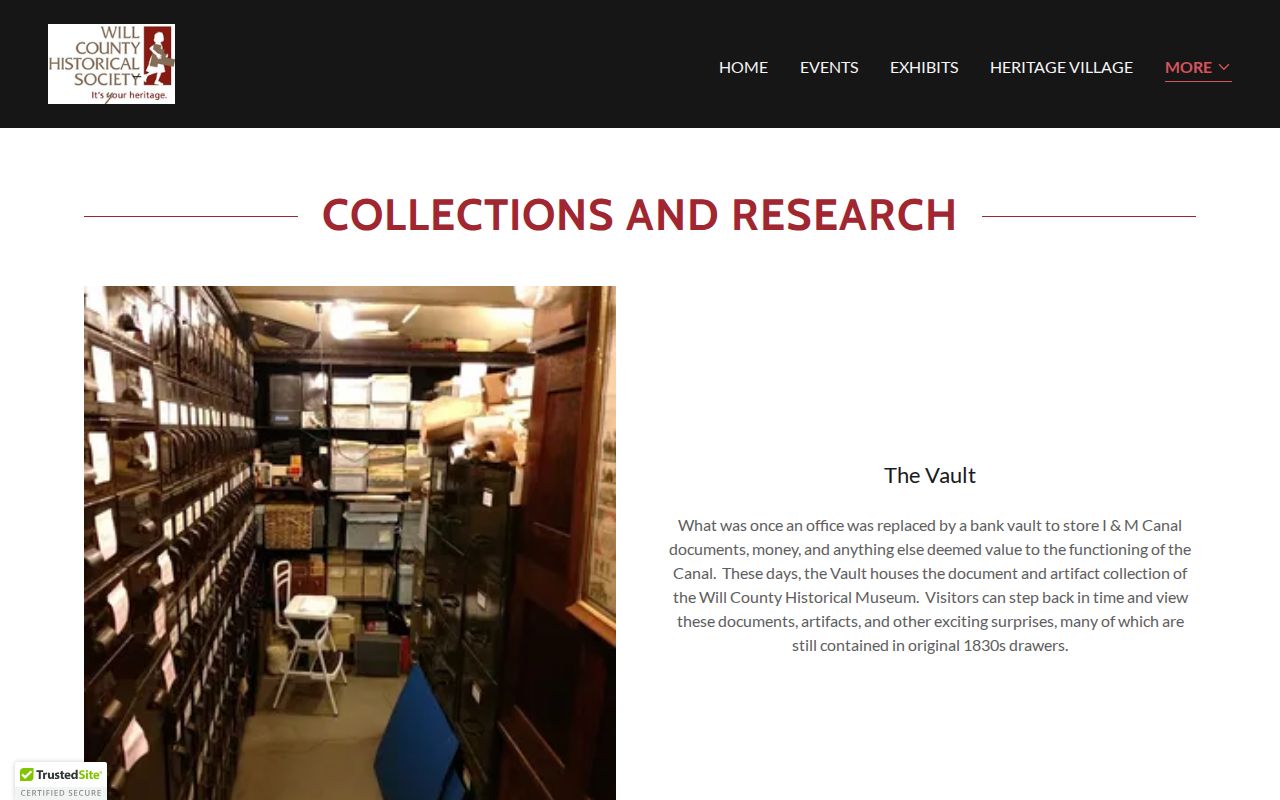
Its Research and Genealogical Room holds county, court, canal, church, newspaper, mortgage, cemetery, photograph, school, and African-American genealogy material. Submit a research request rather than assuming a full name search is online.
Bridge Will County Address Changes
Will County was organized in 1836 and reached its present boundary shape in 1845. Later annexations, subdivisions, and postal naming can make the same land appear under a new place label. Direct Search includes ANNEXATIONS, PROPOSED ANNEXATION, PLAT OF DEDICATION, PLAT OF VACATION, and correction or plat document types that can explain a break.
Postal and municipal names must remain separate. Official ZIP data can pair Joliet with Rockdale or Homer Glen with Lockport. Search old directories and newspapers under both the postal name and incorporated place, then use plats, GIS municipality layers, and the legal description to prove continuity.
Date Changes at Will County Houses
A transfer date, directory year, census date, and obituary date describe different moments. Build a timeline instead of merging them. The Recorder date marks a filed instrument. A directory reflects one publication cycle. The census records a household at enumeration, and an obituary may describe relationships after a move or death.
Illinois Sanborn fire-insurance maps cover communities from 1867 through 1970, and the Library of Congress has a ten-sheet 1909 Lockport set. These maps show footprints, construction details, uses, and street labels. They do not name each resident. Compare a mapped address with a directory and deed description.
Will County's 2025 aerial images help with a recent physical timeline, while historic atlases can place an older parcel within a township or subdivision. A visible addition does not prove its permit date. Ask the responsible development office for address-keyed permit records.
Resolve Will County Address Changes
An old house may vanish from an address search because its street was renamed, its number changed, a rural route became a street address, or annexation altered the municipal label. Start with the earliest exact wording. Search without a suffix, compare nearby names, and use the subdivision, legal description, township, and PIN to cross the gap.
The county GIS distinguishes physical situs from tax mailing information, and its postal label may not match city limits. Preserve both labels in research notes rather than silently choosing one.
If a directory has a street section, browse addresses around the target number. Neighboring households can confirm the right block even when one name is missing. Then use the alphabetical section for occupations, spouse names, or abbreviation marks. A criss-cross volume makes the process faster, but a complete local run was not verified.
Confirm Will County Past Households
Deeds follow interests in land, not all occupants. Use a city directory to place a printed name at an address in one year, then compare the nearest public federal census from 1900 through 1950. The directory collection details and gaps belong on the Will County city directory page.
- Choose a directory year and cite its title, year, page, and exact address entry.
- Locate the nearest released census schedule and match street, house number, names, ages, and relationships.
- Check the directory before and after that census to bound the household's likely span.
- Use an obituary, newspaper item, cemetery entry, probate case, or recorded transfer to explain arrival, departure, or death.
Joliet Public Library holds newspapers on microfilm from 1846 forward and obituary indexes for 1915–18 and 1976–2012. Plainfield's obituary database reaches from 1893 forward. A probate file can identify an estate or heir transfer, but each citation still needs confirmation from the Circuit Clerk, Recorder, library, or archive.
A gap between directory years should remain a gap. Do not assume the same household stayed throughout it. Search the nearest volumes on both sides, then test the interval with a deed, census, newspaper, probate file, school item, cemetery source, or obituary. Cite each source and date separately so another researcher can repeat the trail.
Lawful use. Research Will County previous residents for house history, genealogy, and other lawful personal purposes. Never use the trail to harass or track a living person.